
Blog
Prefab Homes: Affordable, Stylish, and Sustainable Housing for Modern Living

Prefab Homes: A Complete Guide to Modern, Affordable, and Efficient Living
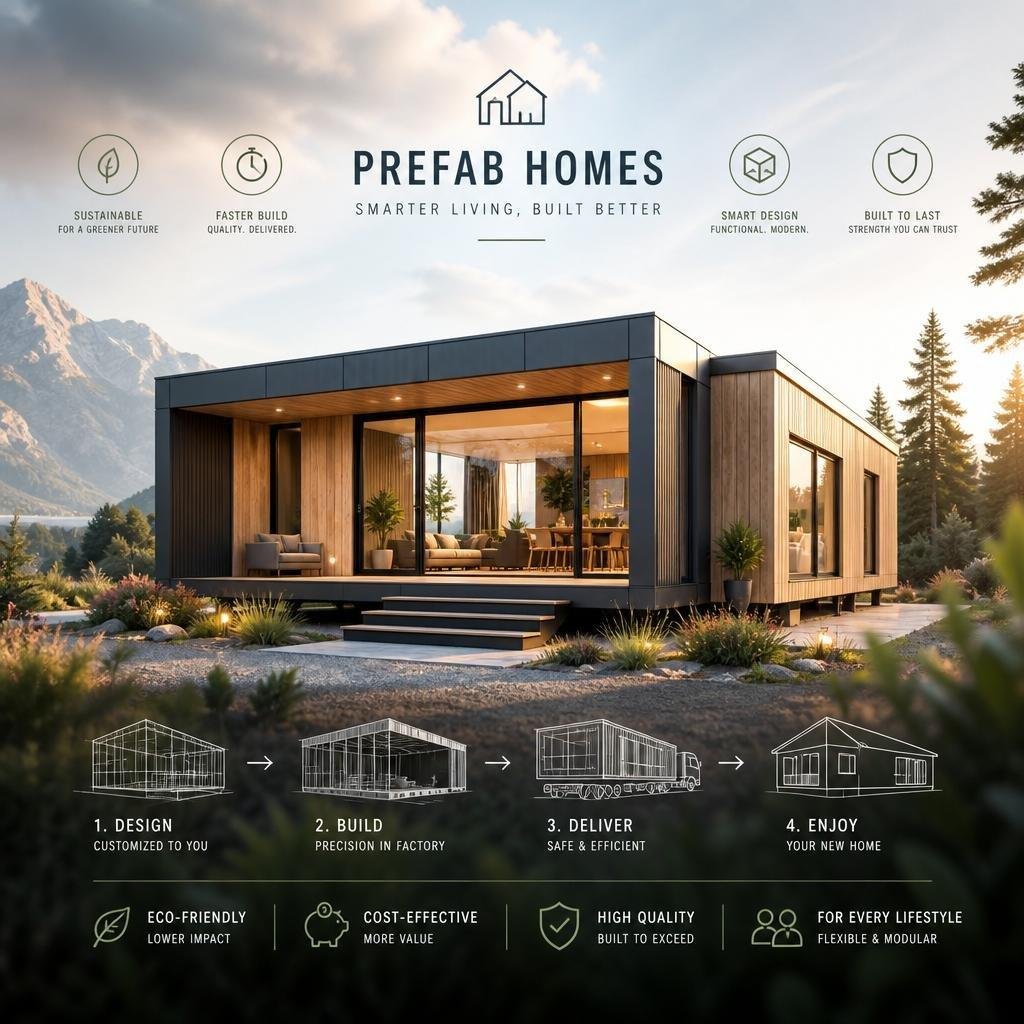
Prefab homes are changing the way people think about building a house. Once associated with basic, cookie-cutter designs, today’s prefabricated homes can be stylish, energy-efficient, durable, and highly customizable. Whether you are looking for an affordable starter home, a modern mountain retreat, a backyard guest house, or a full-size family residence, prefab construction offers a faster and often more predictable path to homeownership.
In this guide, we’ll explore what prefab homes are, the different types available, how much they cost, their benefits, potential drawbacks, and practical tips for choosing the right prefab home builder. If you’re researching modern prefab homes, modular homes, or prefab house costs, this article will help you make a more informed decision.
What Are Prefab Homes?
Prefab homes, short for prefabricated homes, are houses built partially or entirely in a factory before being transported to the final building site. Instead of constructing every part of the home outdoors on a traditional job site, prefab components are manufactured in a controlled environment, then assembled on the property.
This approach can reduce construction delays caused by weather, improve quality control, and speed up the overall building timeline. Prefab homes are not one specific style of house. They can be modern, rustic, minimalist, traditional, tiny, luxury, or anything in between.
Common prefab home styles include:
- Modern prefab homes with clean lines, large windows, and open floor plans
- Cabin-style prefab homes for vacation properties or rural land
- Energy-efficient prefab homes designed for low utility costs
- Small prefab homes for downsizing or accessory dwelling units
- Luxury modular homes with custom finishes and premium materials
Main Types of Prefab Homes
Not all prefab homes are built the same way. Understanding the main categories will help you compare options, pricing, and financing requirements.
| Type of Prefab Home | How It’s Built | Best For |
|---|---|---|
| Modular Homes | Built in sections, then assembled on a permanent foundation | Full-time residences and custom homes |
| Manufactured Homes | Built to federal HUD standards and transported to the site | Affordable housing and planned communities |
| Panelized Homes | Wall panels, roof systems, and floors are factory-built | Flexible designs and faster on-site construction |
| Prefab Kit Homes | Pre-cut materials shipped for assembly | DIY-friendly projects and cabins |
| Tiny Prefab Homes | Compact factory-built homes, often under 500 square feet | Minimalist living, guest houses, and ADUs |
Modular Homes
Modular homes are one of the most popular forms of prefab housing. They are built in large sections, called modules, inside a factory. These modules are then transported to the land and placed on a permanent foundation by a crane.
Once completed, a modular home can look nearly identical to a site-built home. In many areas, modular homes must meet the same local building codes as traditional houses. They can often be financed with conventional mortgages and may appreciate in value similarly to site-built properties, depending on the location, quality, and market conditions.
Manufactured Homes
Manufactured homes are also factory-built, but they follow national HUD construction standards in the United States rather than local building codes. They are sometimes placed on leased land in manufactured home communities, though they can also be installed on private property when zoning allows.
Manufactured homes are often more affordable than modular or traditional homes, making them a practical option for buyers focused on budget-friendly housing. However, financing, resale value, and land ownership can vary, so it’s important to review local regulations and loan options carefully.
Panelized Homes
Panelized prefab homes are built using factory-made wall panels, floor systems, and roof sections. These panels are delivered to the site and assembled quickly. Panelized construction gives homeowners and architects more design flexibility while still benefiting from factory precision.
Prefab Kit Homes
Prefab kit homes come with pre-measured and pre-cut materials. Some kits are simple cabins or tiny homes, while others are larger residences. These are popular with experienced DIYers, but most buyers still hire contractors for foundation work, utility connections, and final assembly.
Benefits of Prefab Homes
There are many reasons why buyers are searching for prefab homes for sale and considering factory-built housing. Here are some of the biggest advantages.
1. Faster Construction Timeline
Traditional home construction can take many months or even more than a year, depending on weather, labor availability, permits, and supply chain delays. Prefab homes are often completed faster because much of the building process happens indoors while site work is being completed at the same time.
For example, while the foundation is being prepared on your land, the home modules or panels can be built in the factory. This parallel process can significantly reduce the overall project timeline.
2. More Predictable Costs
One of the biggest frustrations with traditional construction is budget uncertainty. Prefab home builders typically provide clearer upfront pricing for the home itself. While land, permits, foundation, delivery, and utility connections can still add costs, the factory-built portion is usually easier to estimate.
This makes prefab housing appealing to buyers who want to avoid major cost surprises.
3. Quality Control
Because prefab homes are built in controlled factory environments, materials are protected from rain, snow, wind, and other weather-related damage. Factory construction also allows for standardized inspections and consistent workmanship.
That doesn’t mean every prefab home is automatically high quality. As with any construction method, the builder’s experience, materials, engineering, and installation process matter. Still, the controlled environment can provide a strong advantage.
4. Energy Efficiency
Many energy-efficient prefab homes are designed with tight building envelopes, high-performance insulation, efficient windows, and modern HVAC systems. Some prefab home companies also offer solar-ready designs, passive house features, or net-zero energy packages.
Energy-efficient upgrades may cost more upfront, but they can reduce monthly utility bills and improve long-term comfort.
5. Design Flexibility
Today’s prefab homes are far from boring. Buyers can choose from compact studios, two-bedroom cottages, large family homes, luxury retreats, and contemporary designs with premium finishes.
Common customization options include:
- Floor plan changes
- Exterior siding and roofing materials
- Kitchen and bathroom finishes
- Window placement and sizes
- Porches, decks, and garages
- Smart home features
- Solar panels and battery storage
How Much Do Prefab Homes Cost?
Prefab home cost depends on the size, design, location, materials, builder, site conditions, and level of customization. A small prefab cabin or tiny home may cost far less than a large custom modular home with luxury finishes.
When comparing prices, pay close attention to what is included. Some advertised prefab home prices only cover the factory-built structure, while others include delivery, installation, foundation, and finishing work.
| Cost Category | What It Includes | Budget Tip |
|---|---|---|
| Base Home Price | Factory-built modules, panels, or kit materials | Ask for a detailed specification sheet |
| Land | Purchase of the building lot | Check zoning before buying |
| Foundation | Slab, crawl space, basement, or piers | Soil conditions can affect cost |
| Delivery & Crane | Transport and placement of modules or panels | Remote sites may cost more |
| Utilities | Water, sewer/septic, electricity, gas, internet | Get estimates early |
| Permits & Fees | Local approvals, inspections, impact fees | Contact the building department first |
As a general rule, buyers should look beyond the advertised price and calculate the total project cost. A “$150,000 prefab home” may become a much larger investment once land preparation, utility hookups, permits, and finishes are included.
Prefab Homes vs. Traditional Homes
Prefab homes and traditional site-built homes can both be excellent options. The best choice depends on your budget, timeline, location, and design goals.
Prefab Homes May Be Better If You Want:
- A faster building timeline
- More predictable construction costs
- Factory-controlled quality
- Modern, efficient design options
- Less waste during construction
- A streamlined building process
Traditional Homes May Be Better If You Want:
- Maximum architectural customization
- A highly complex or unusual home design
- More flexibility during construction changes
- A builder who specializes in your exact local market
In many cases, the finished result can be very similar. A well-built modular home on a permanent foundation may be difficult to distinguish from a traditional site-built home.
Are Prefab Homes Durable?
Yes, high-quality prefab homes can be very durable. In fact, modular homes are often engineered to withstand transportation from the factory to the site, which means they may include strong framing and structural reinforcement.
Durability depends on several factors:
- The builder’s construction standards
- Materials used
- Foundation quality
- Proper installation
- Local climate considerations
- Ongoing maintenance
If you live in an area with heavy snow, hurricanes, wildfires, or seismic activity, choose a prefab home builder familiar with local requirements. The home should be engineered for your region’s building codes and environmental conditions.
Financing a Prefab Home
Financing options vary depending on the type of prefab home. Modular homes on permanent foundations are often eligible for traditional mortgage products, while manufactured homes may require specialized loans, especially if the land is leased rather than owned.
Common prefab home financing options include:
- Construction loans: Used during the building phase, often converted to a mortgage after completion.
- Conventional mortgages: May be available for modular homes on owned land.
- FHA, VA, or USDA loans: Possible for eligible buyers and qualifying properties.
- Chattel loans: Often used for manufactured homes not attached to owned land.
- Personal loans: Sometimes used for small prefab cabins, tiny homes, or ADUs.
Before choosing a prefab home, speak with lenders who understand factory-built housing. Not every lender is familiar with prefab construction, so experience matters.
Practical Tips for Buying a Prefab Home
Buying a prefab house is exciting, but it requires careful planning. Here are practical tips to help you avoid common mistakes.
1. Confirm Local Zoning Rules
Before purchasing land or signing a contract, contact the local planning and building departments. Ask whether modular homes, manufactured homes, tiny homes, or accessory dwelling units are allowed on the property.
2. Understand What Is Included
Prefab home packages vary widely. Some include only the shell, while others include appliances, cabinets, flooring, and fixtures. Always ask for a written breakdown.
3. Budget for Site Work
Site work can be one of the most unpredictable parts of the project. Grading, tree removal, driveway installation, septic systems, wells, and utility extensions can add significant costs.
4. Choose an Experienced Builder
Look for a prefab home company with strong reviews, transparent pricing, completed projects, and experience in your region. Ask for references and examples of finished homes.
5. Visit a Model Home if Possible
Photos and renderings are helpful, but walking through a completed prefab home gives you a better sense of layout, ceiling height, finishes, and build quality.
6. Plan for Delivery Access
Large modules or panels need road access, turning space, and sometimes crane access. A beautiful remote lot may require extra planning and costs if delivery is difficult.
Example Scenario: A Small Modern Prefab Home
Imagine a couple buying a rural lot for a weekend getaway. They choose a 900-square-foot modern prefab home with two bedrooms, one bathroom, large windows, and an open kitchen-living area. The factory builds the main modules while a local contractor prepares the foundation and septic system.
Once the modules arrive, a crane places them on the foundation in a single day. Over the next several weeks, contractors connect utilities, complete interior seams, install decks, and finish inspections. Compared with a fully site-built cabin, the prefab process helps reduce weather delays and gives the owners a clearer schedule.
This type of project shows why many buyers are drawn to small prefab homes: they can be efficient, comfortable, attractive, and easier to plan than a traditional custom build.
Common Myths About Prefab Homes
Myth 1: Prefab Homes Are Low Quality
Some people still imagine old-fashioned mobile homes when they hear the word prefab. In reality, modern prefab homes can be built with high-end materials, advanced engineering, and beautiful architectural design.
Myth 2: Prefab Homes All Look the Same
Prefab homes come in many styles, from Scandinavian-inspired cabins to farmhouse designs and luxury contemporary residences. Many companies offer customization options.
Myth 3: Prefab Homes Are Always Cheap
Prefab homes can be affordable, but they are not always inexpensive. High-end modular homes can cost as much as, or sometimes more than, traditional homes depending on finishes, site conditions, and location.
Myth 4: Prefab Homes Don’t Appreciate in Value
Appreciation depends on the type of home, land ownership, location, market conditions, and quality. Modular homes on permanent foundations may appreciate similarly to site-built homes in many markets. Manufactured homes can vary more depending on whether land is owned or leased.
Are Prefab Homes Eco-Friendly?
Prefab homes can be a more sustainable housing option, especially when designed for energy efficiency. Factory construction often reduces material waste because measurements are precise and leftover materials can be reused more easily.
Eco-friendly prefab home features may include:
- High-performance insulation
- Energy-efficient windows and doors
- Solar panel compatibility
- Low-VOC paints and finishes
- Water-saving fixtures
- Efficient heating and cooling systems
- Sustainable siding or flooring materials
If sustainability is a priority, ask builders about energy ratings, material sourcing, airtightness, and renewable energy options.
Frequently Asked Questions About Prefab Homes
How long does it take to build a prefab home?
Timelines vary, but prefab homes are often completed faster than traditional homes. The factory build may take several weeks to a few months, while site preparation, permitting, delivery, and finishing can add more time.
Can prefab homes be customized?
Yes. Many prefab home builders offer customization options, including layout changes, exterior materials, finishes, fixtures, and energy-efficient upgrades. However, too many custom changes may increase cost and extend the timeline.
Do prefab homes need a foundation?
Most modular and panelized homes require a permanent foundation. Manufactured homes may be installed on different foundation systems depending on local rules, financing, and the intended use.
Can I put a prefab home anywhere?
No. Local zoning laws, building codes, subdivision rules, HOA restrictions, and land conditions determine whether a prefab home is allowed. Always confirm regulations before purchasing.
Are prefab homes good for first-time buyers?
Prefab homes can be a good option for first-time buyers because they may offer clearer pricing, faster construction, and smaller floor plans. However, buyers still need to budget carefully for land, permits, utilities, and site work.
Conclusion: Is a Prefab Home Right for You?
Prefab homes offer a smart, modern approach to homebuilding. They can be faster to construct, easier to budget, energy-efficient, and surprisingly stylish. From compact tiny homes to spacious modular residences, today’s prefabricated homes provide options for many lifestyles and budgets.
That said, a successful prefab home project requires research and planning. You’ll need to understand local zoning, compare builders, review what is included in the price, budget for site work, and secure the right financing. The best results come from treating a prefab home like any major real estate investment: with careful due diligence and a clear plan.
If you want a home that combines efficient construction, modern design, and long-term comfort, a prefab home may be an excellent choice. With the right builder and the right property, your dream home could be built faster-and with fewer surprises-than you might expect.